 |
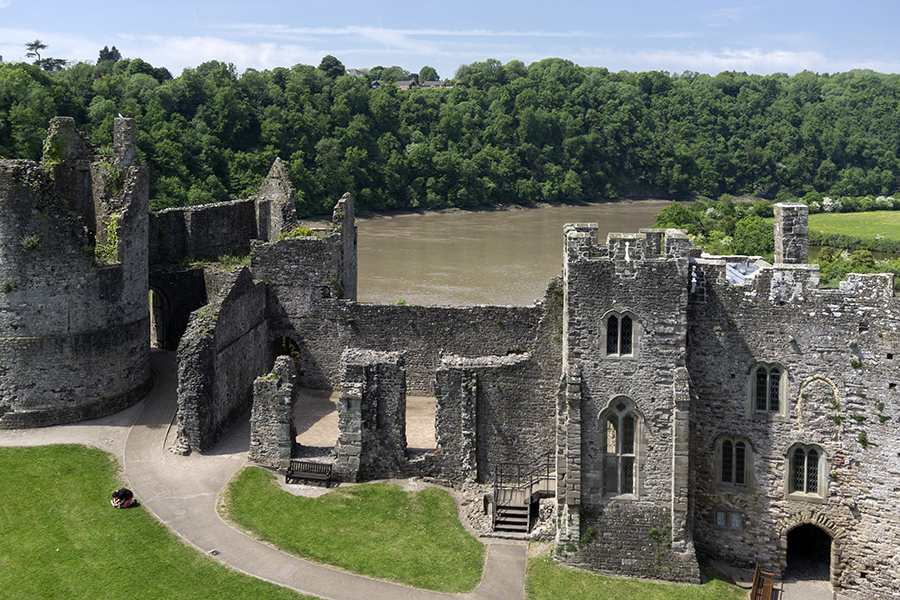
| Chepstow Castle from elevated position |
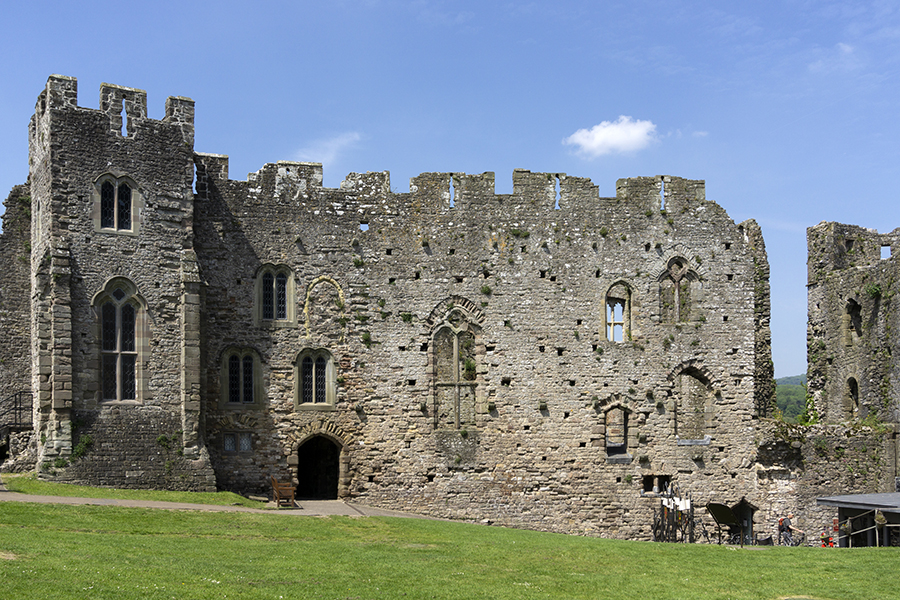 |
| Chepstow Castle |
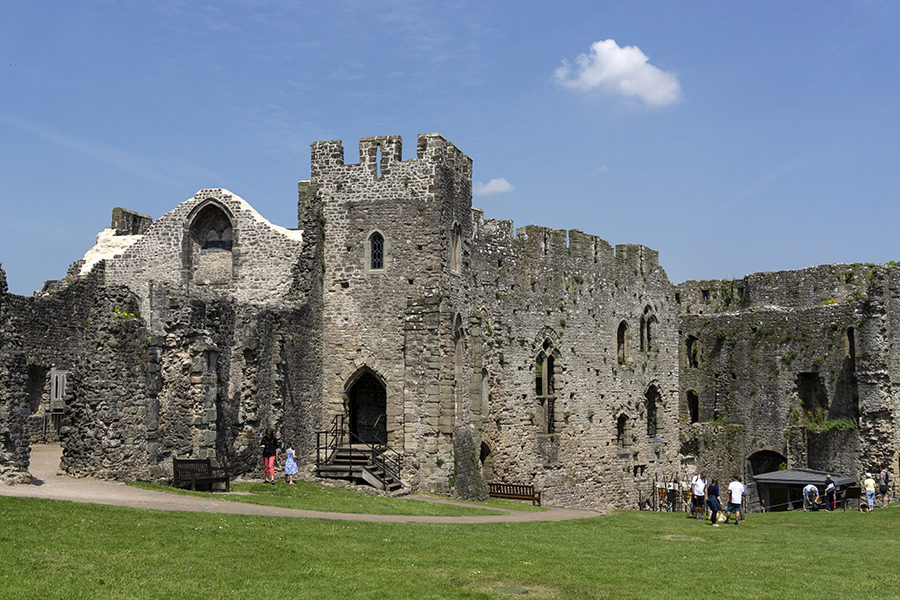 |
| View towards entrance |
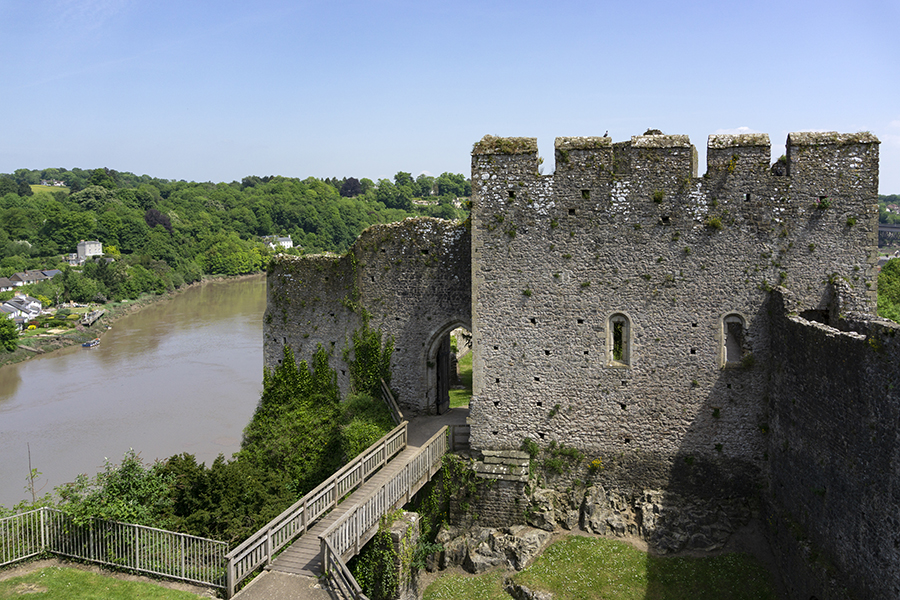 |
| View towards the River |
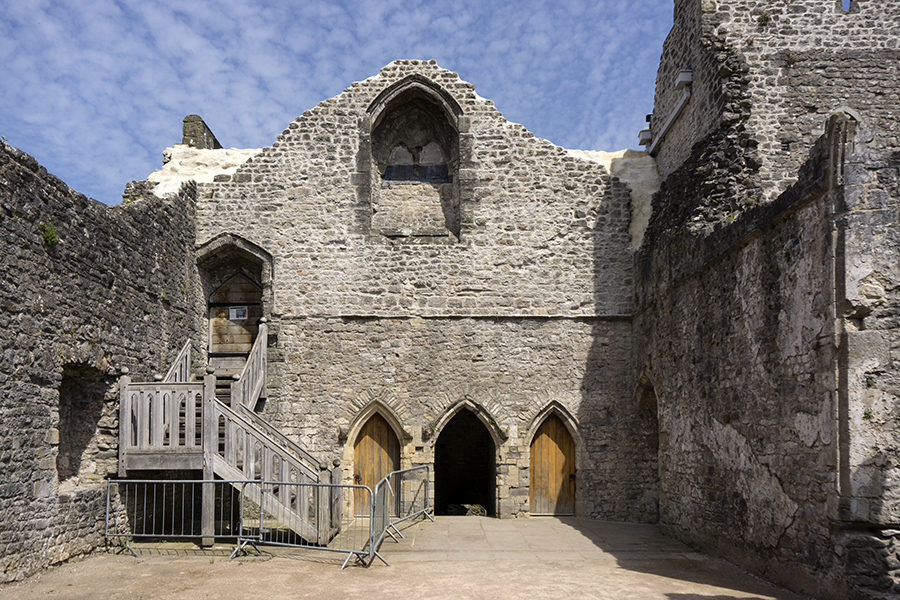 |
| Inner Couryard |
| |
| Chepstow Castle from elevated position |
| |
| Chepstow Castle |
| |
| View towards entrance |
| |
| View towards the River |
|
| Inner Couryard |
 |
 |
|
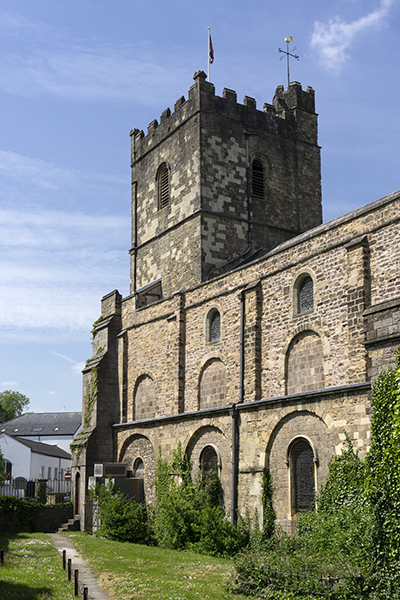
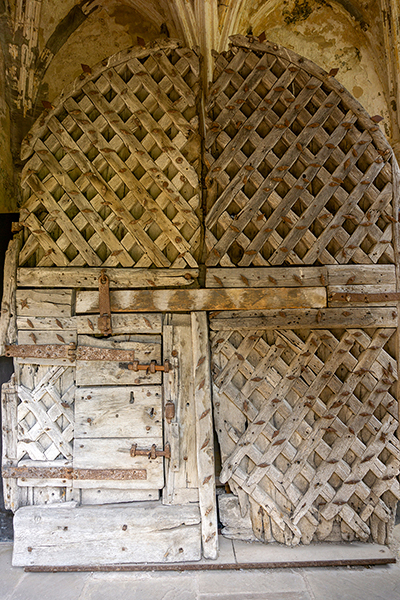
| Priory church of St. Mary | Castle door dated to 1159-1189 |
|
 |
 |
|
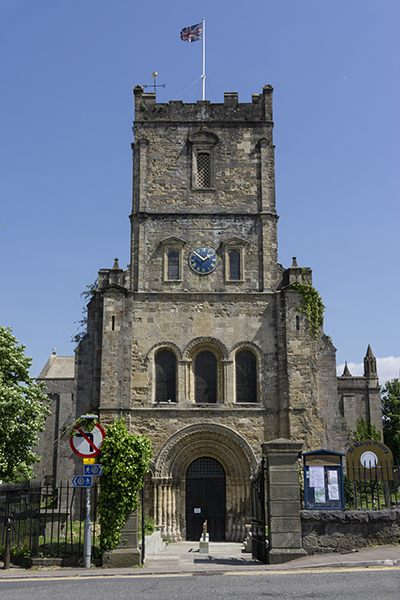
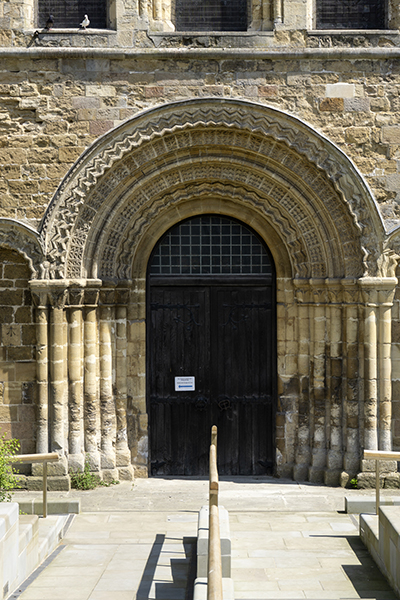
| St. Mary's |
|
West door with Norman Arches |
Chepstow (Welsh: Cas-gwent) is a town in Monmouthshire, Wales, adjoining the border with Gloucestershire. The Welsh name Cas-gwent refers to the "castle of Gwent". The name Gwent itself derives from the Roman settlement Venta Silurum or 'Market of the Silures', now named Caerwent, 5 miles (8 km) west of Chepstow, which had been the Romano-British commercial centre of south-east Wales. There were two major tribes in Wales before the Roman invasion. The Silures were in the south and
Chepstow's name is derived from the Old English
for market place. The town is
located on the tidal River Wye, about 2 miles (3 km) above its
confluence with the River Severn, and adjoining the western end of the
Severn Bridge. It is the easternmost settlement in Wales, situated 16
miles (26 km) east of Newport, 28 miles (45 km) east-northeast of
Cardiff. Chepstow Castle, situated on a
clifftop above the Wye and the old bridge, is often cited as the oldest
surviving stone castle in Britain. The castle was established by William
FitzOsbern immediately after the Norman Conquest. William
FitzOsbern was the 1st Earl of Hereford, Lord of Breteuil (c. 1011 – 22
February 1071). He was a relative and close counsellor of William
the Conqueror and one of the great magnates of early Norman England.
FitzOsbern was created Earl of Hereford in 1067,] one of the first
titles in the English peerage. He is one of the very few proven
companions of William the Conqueror known to have fought at the Battle
of Hastings in 1066. His chief residence was Carisbrooke Castle on the
Isle of Wight, one of many castles he built in England. In the
case of Chepstow, the steep cliffs adjacent to the river provided a
good defensive position. Building work started under William
FitzOsbern in 1067 or shortly afterwards. The Great Tower was probably
completed by about 1090, possibly intended as a show of strength by
King William in dealing with the Welsh king Rhys ap Tewdwr. It
was constructed in stone from the first (as opposed to wood, like most
others built at this time), marking its importance as a stronghold on
the border between England and Wales. Although much of the stone seems
to have been quarried locally, there is also evidence that some of the
blocks were re-used from the Roman ruins at Caerwent.[7]
The castle originally had the Norman name of Striguil, derived from the
Welsh word ystraigl meaning "river bend". The castle and the
associated Marcher lordship were generally known as Striguil until the
late 14th century, and as Chepstow thereafter. Further
fortifications were added by William Marshal, Earl of Pembroke,
starting in the 1190s. The wood in the doors of the gatehouse has been
dated by dendrochronology to the period 1159–89. Marshal extended
and modernised the castle, drawing on his knowledge of warfare gained
in France and the Crusades. He built the present main gatehouse,
strengthened the defences of the Middle Bailey with round towers, and,
before his death in 1219, may also have rebuilt the Upper Bailey
defences. Further work to expand the Great Tower was undertaken for
William Marshal's sons William, Richard, Gilbert and Walter, in the
period to 1245.[7]
In 1270, the castle was inherited by Roger Bigod, 5th Earl of Norfolk,
who was a grandson of William Marshal's eldest daughter, Maud. He
constructed a new range of buildings in the Lower Bailey, as
accommodation for himself and his family. Bigod was also responsible
for building Chepstow's town wall, the "Port Wall", around 1274–78. The
castle was visited by King Edward I in 1284, at the end of his
triumphal tour through Wales. Soon afterwards, Bigod had built a new
tower (later known as "Marten's Tower"), which now dominates the
landward approach to the castle, and also remodelled the Great Tower.
The castle became ruined after the Civil War. The port of Chepstow became noted in the Middle Ages for its imports of wine, and also became a major centre for the export of timber and bark, from nearby woodland in the Wye Valley and Forest of Dean.
The Priory Church of St Mary dates from the late 11th century and is contemporary with the nearby Norman castle. The church is a Grade I listed building. It was founded around 1072 as a Benedictine priory by William FitzOsbern and his son Roger de Breteuil, 2nd Earl of Hereford. FitzOsbern had been granted the Lordship of Striguil by his second cousin King William in gratitude for his support in the Norman Conquest of England. At the same time he established a nearby monastic cell, so as to collect rent from the lands within Gwent which he had granted to his home Priory of Cormeilles in Normandy. By the early 12th century, the monastic establishment, on a ridge overlooking the river about 300 metres from the castle, had the status of an alien priory in its own right, though it probably never held more than about 12 monks. It superseded an earlier Augustinian priory located about 2 km away, which was dedicated to the Welsh saint Cynfarch (or Saint Kingsmark), a disciple of Saint Dyfrig.

 1.0 Strict
