DENBIGH
Grid Ref: SJ 053 657
Date 31 January 2011
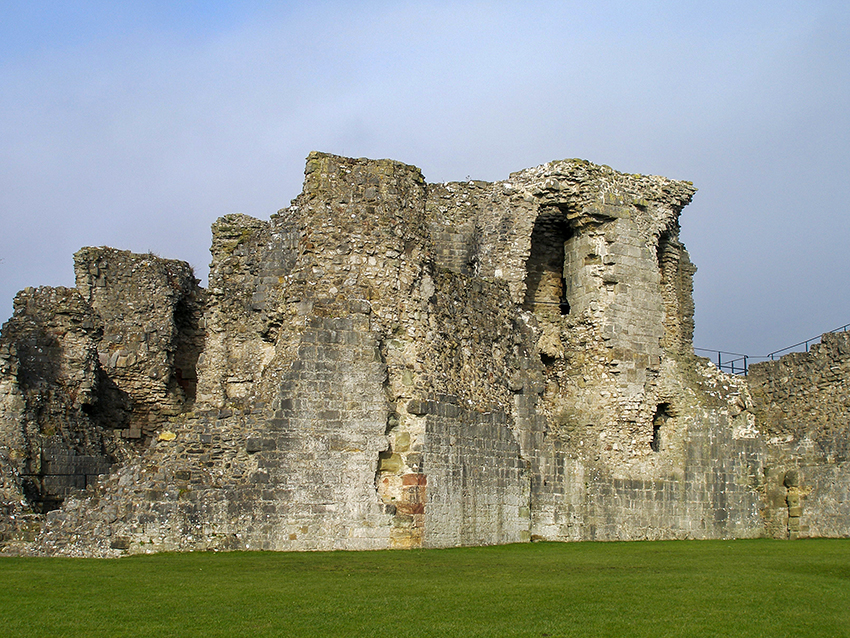 |
| Denbigh Castle |
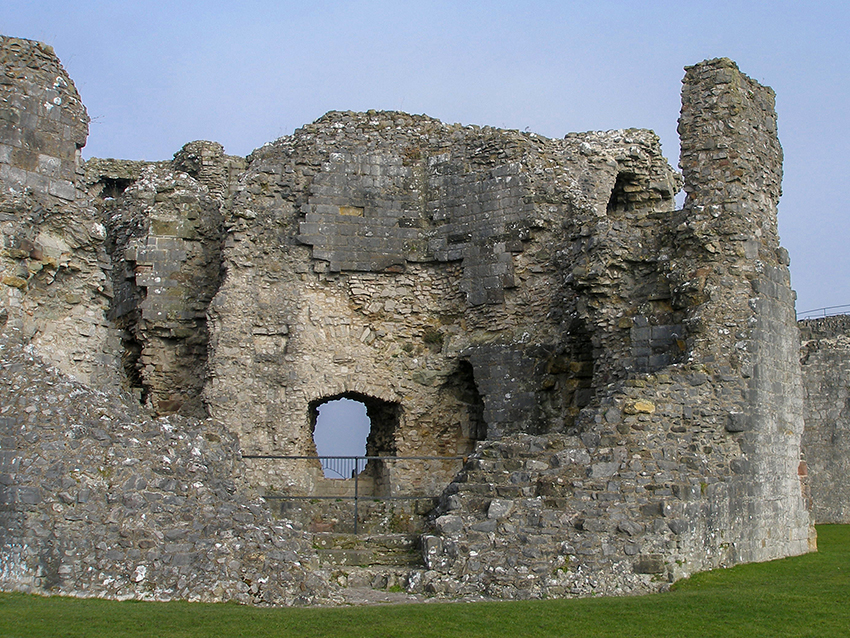
|
| Denbigh Castle
|
 |
|
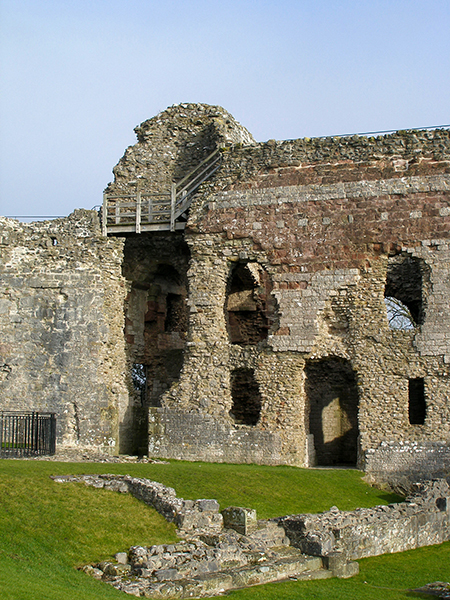 |
| Castle Ruins |
|
Castle Ruins |
Wikipedia
tells us that Denbigh anciently formed part of the cantref of Rhufoniog, a
subordinate to the Kingdom of Gwynedd, but it also spent periods under English
control during the 12th and 13th centuries. By the 13th century, Denbigh was the
main town of Rhufoniog. In 1284, following the Conquest of Wales by Edward I,
Rhufoniog was made part of a new marcher lordship called Denbigh or Denbighland,
which Edward initially granted to Henry de Lacy, Earl of Lincoln.
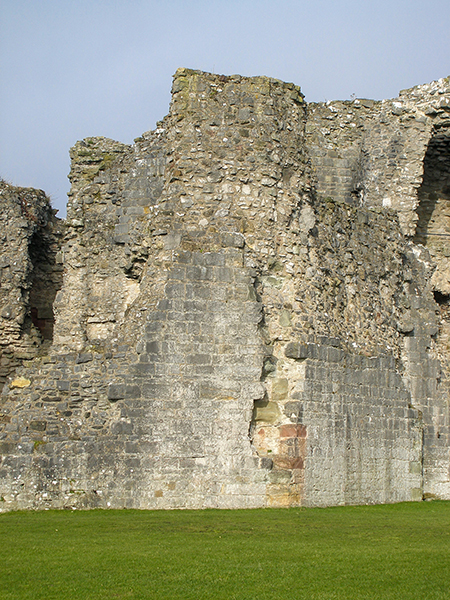
As part of his campaign to take and retain control of the area, Edward I decided
to fortify Denbigh, ordering the construction of Denbigh Castle and town walls,
which were begun in 1282. The Burgess Gate, whose twin towers adorn the symbol
on Denbigh's civic seal, was once the main entrance into the town. The town was
involved in the revolt of Madog ap Llywelyn in 1294–1295; the castle was
captured in the autumn and, on 11 November 1294, a relieving force was defeated
by the Welsh rebels. The town was recaptured by Edward I in December. Denbigh
was also burnt in 1400 during the revolt of Owain Glyndŵr.
During the Wars of the Roses (1455–1487), the town within the walls was largely
destroyed. The focus of the settlement then shifted to a site immediately
outside the old town walls to the north-east, centred on a market place along
High Street.
In 1536, the new county of Denbighshire was created under the Laws in Wales Act
1535, comprising the old lordship of Denbighland plus other territories. Denbigh
was declared to be the county town, with the county's courts directed to be held
alternately at Denbigh and Wrexham. The County Hall (now the library) was built
in 1572 to serve as the town's main public building, functioning as a market
hall, town hall and courthouse for when the county's courts sat in Denbigh.
In 1643, during the English Civil War, Denbigh became a refuge for a Royalist
garrison. Surrendering in 1646, the castle and town walls eventually fell into
ruin.[9]
The town grew around the textile industry in the 1600s, hosting specialist
glovers, weavers, smiths, shoemakers, saddlers, furriers and tanners. Denbigh
has been an important location for agriculture throughout its history.
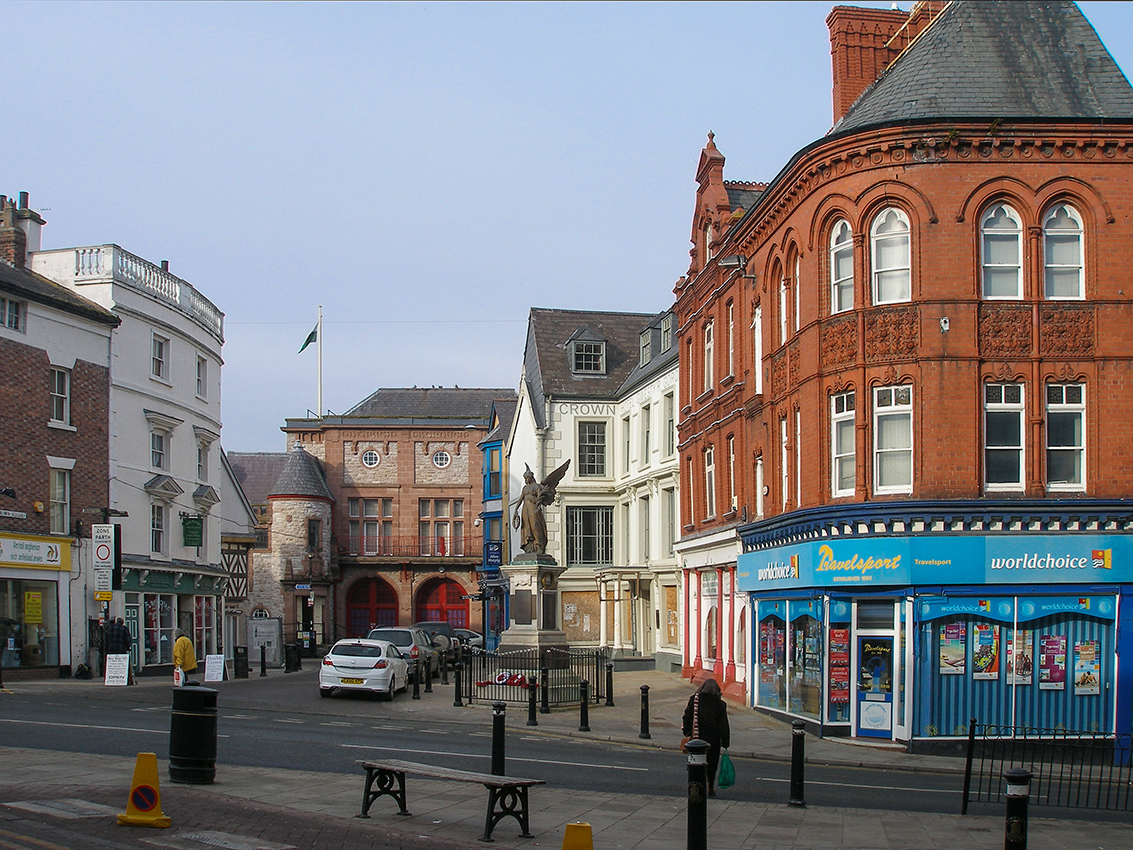 |
| Town Centre with hotel and
War Memorial
|
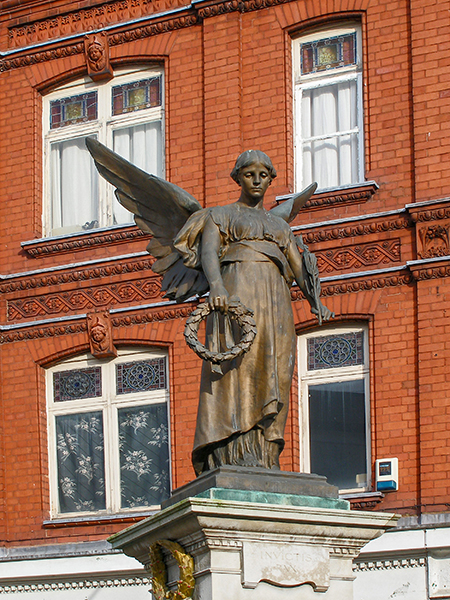 |
|
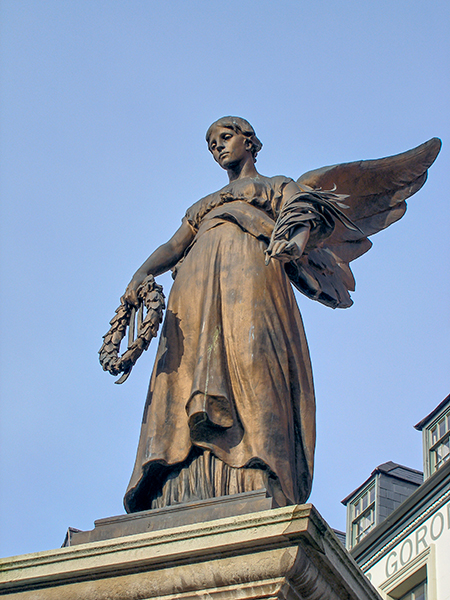 |
| Figure on War Memorial |
|
Against the sky |
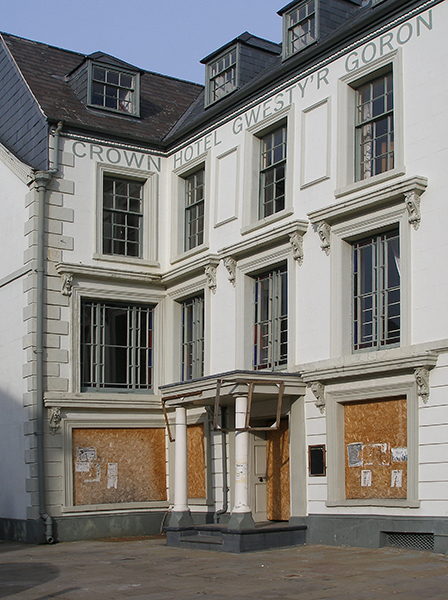 |
|
 |
| Crown Hotel boarded up |
|
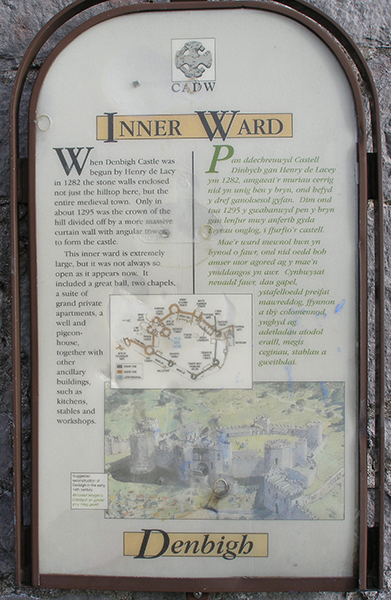
Cadw Information on Inner Ward |
My picture of the CADW display descrbes the
The Inner Ward and read:
When Denbigh Castle was begun by Henry de Lacy in 1282 the
stone walls enclosed not just the hilltop here, but the entire medieval town.
Only in 1295 was the crown of the hill divided off by a more massive curtain
wall with angular towers to form the castle. This inner ward is extremely
large, but it was not always as open as it appears now. It included a
great hall, two chapels, a suite of private apartments, a well and a pigeon
house, together with other ancilliary buildings such as kitchens, stables and
workshops.

 1.0 Strict
