PEN MON ON ANGLESEY
Dates 15 and 22 March 2015
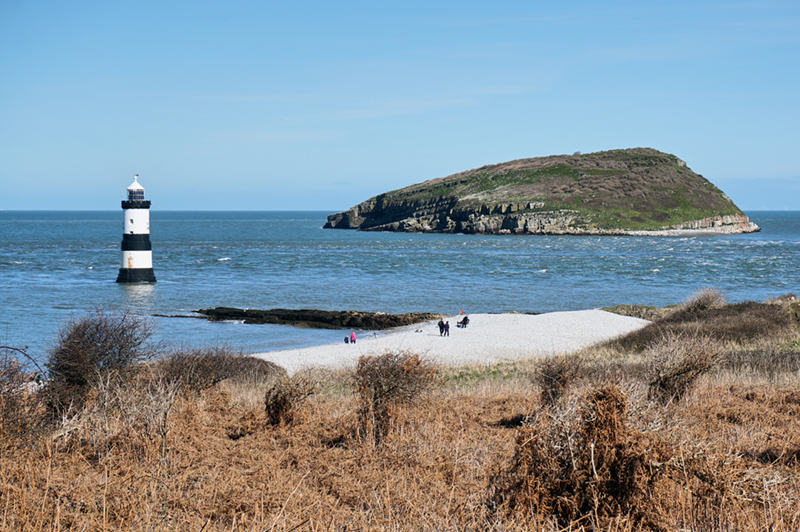 |
| Penmon. Grid Ref: SH 640
812 |
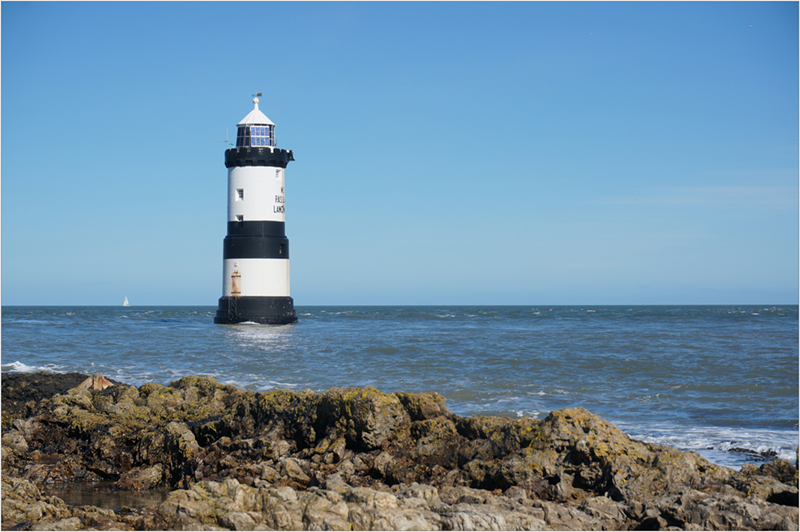 |
| Penmon or Trwyn Du Lighthouse |
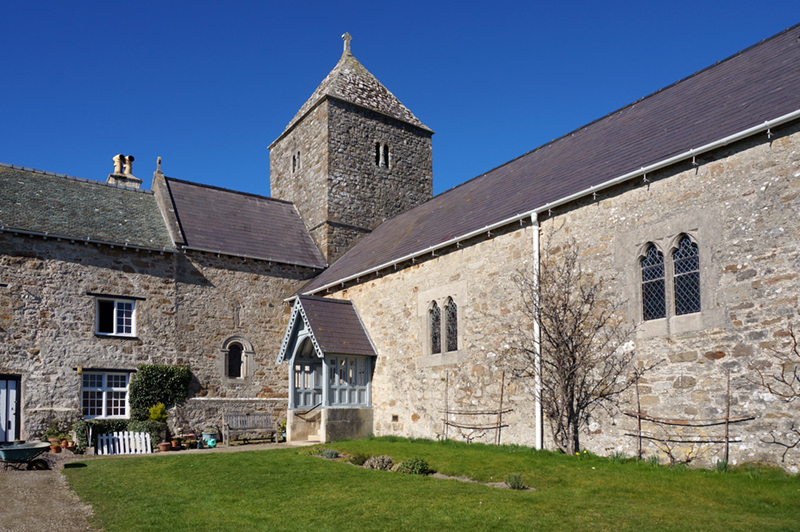 |
| Penmon Priory |
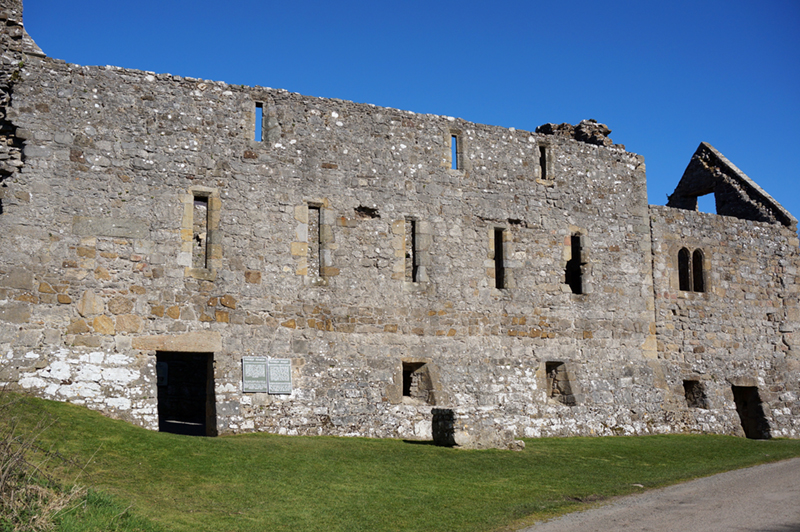 |
| Penmon Priory from behind |
 |
|
 |
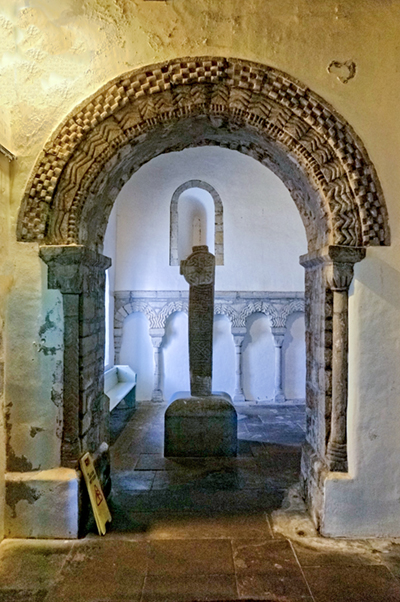
| Norman arch inside priory |
|
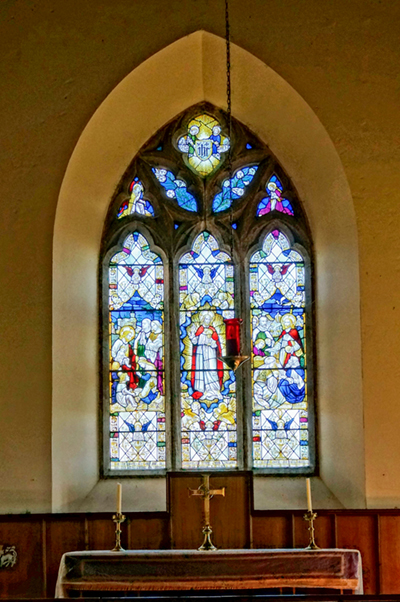
Altar and east window |
Wikipedia tells us that Trwyn Du Lighthouse, also known as Penmon Lighthouse, is a lighthouse between Black Point near Penmon and Ynys Seiriol, or Puffin Island, at the eastern extremity of Anglesey, marking the passage between the two islands. The
first lighthouse was erected in 1838, at a price of £11,589. There had
been a call for a light at this location for some years by master
shipmen in the nearby city of Liverpool, especially after the steamerthe
Rothsay Castle ran aground and broke up on nearby Lavan Sands in 1831
with 130 people losing their lives. The present Lighthouse, built
between 1835 and 1838, is 29 metres tall and was designed by James
Walker.
According to tradition, the community at Penmon grew up
around a monastery established in the early 6th century by Saint Seiriol on
land provided by his brother Saint Einion, king of Llŷn. Although Seiriol
eventually removed himself to a hermitage on nearby Puffin Island, the
monastery prospered and two crosses were set up at its gate. In 971,
Vikings destroyed much of Penmon. The two crosses and the decorated font
remain from this time. During the 12th century, the abbey church was
rebuilt under Gruffudd ap Cynan and Owain Gwynedd. In the 13th century, under
Llywelyn ap Iorwerth, monasteries started a newer more regular kind of rule,
and Penmon became an Augustinian priory with conventional buildings. The
priory expanded. After surviving the conquest of Wales by King Edward, it was
eventually dissolved in 1538. The buildings were transferred to the ownership
of the Bulkeleys of Beaumaris, a prominent local family, and are still in use
today. The Bulkeleys also used most of the land for a deer park, and built the
dovecot near the church.

 1.0 Strict
