 |
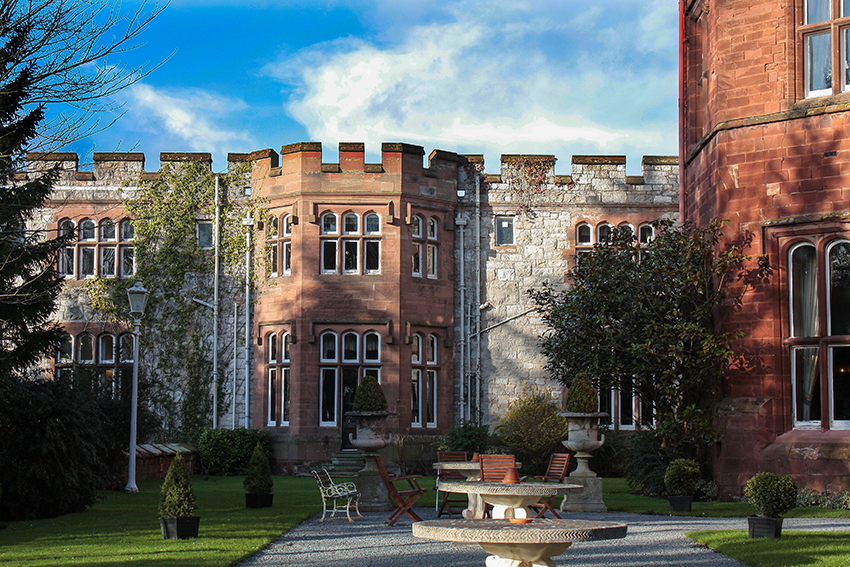
| Part of Ruthin Castle |
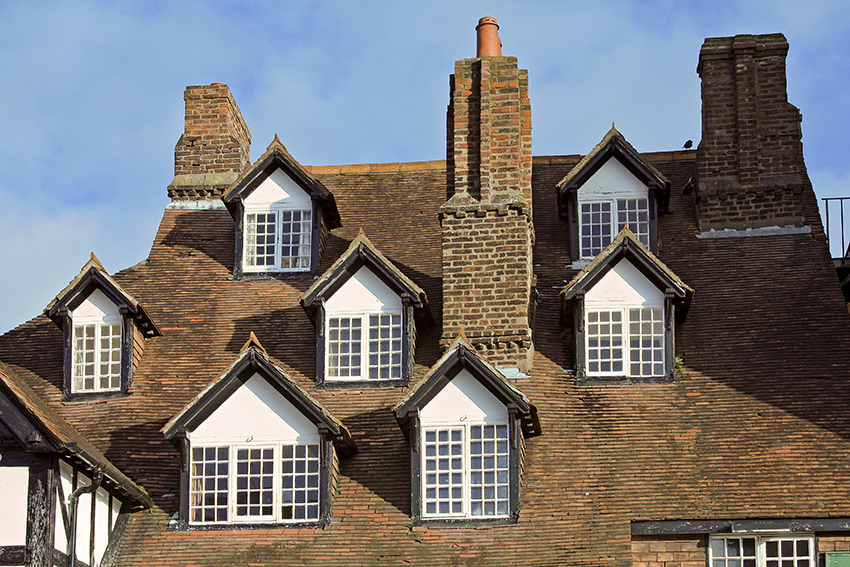 |
| Ambitious Loft Conversion |
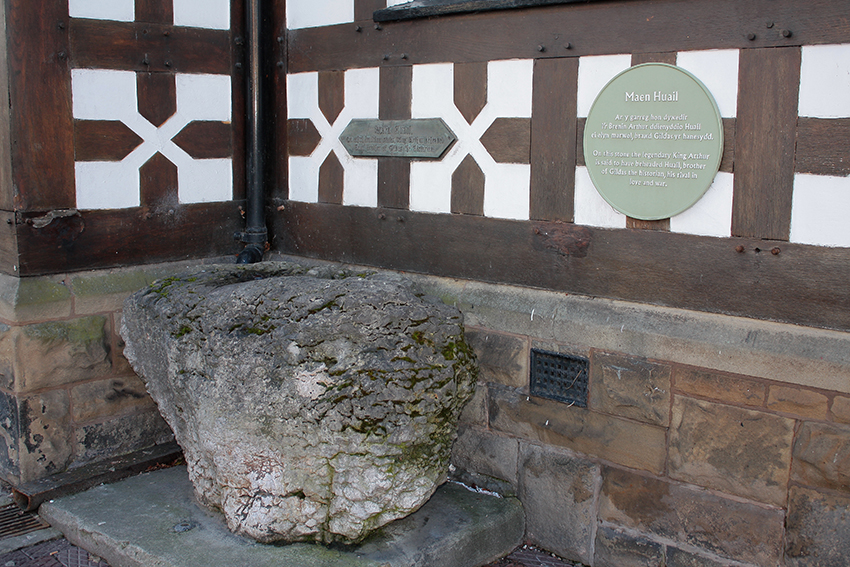 |
| Supposed execution stone |
|
|
| Part of Ruthin Castle |
|
|
| Ambitious Loft Conversion |
|
|
| Supposed execution stone |
 |
 |
|
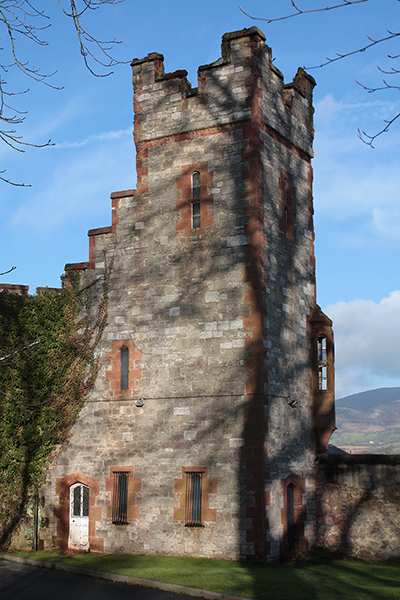
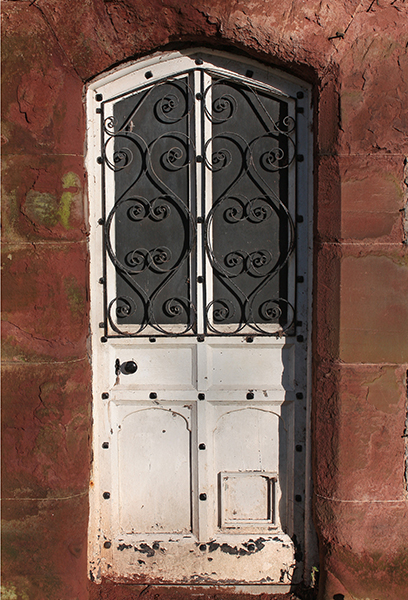
| Castle tower | Fortified tower with cat flap | |
 |
 |
|
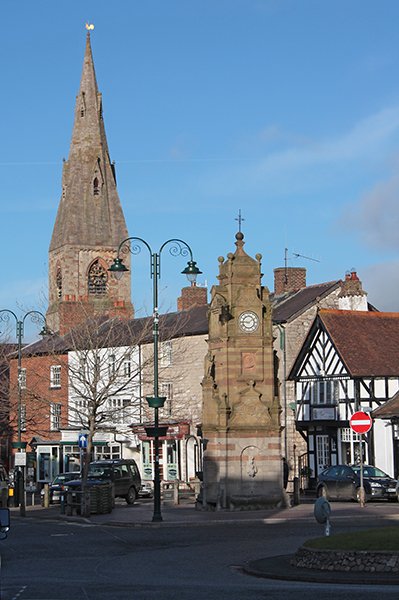
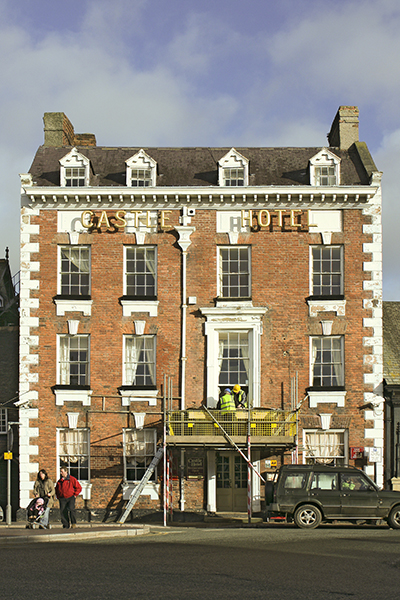
| St. Peter's square | Castle Hotel | |
 |
 |
|
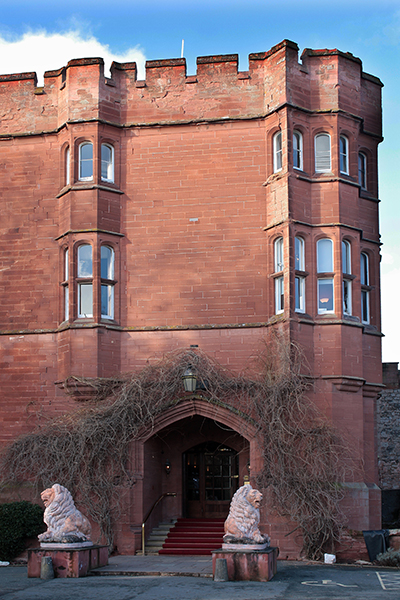
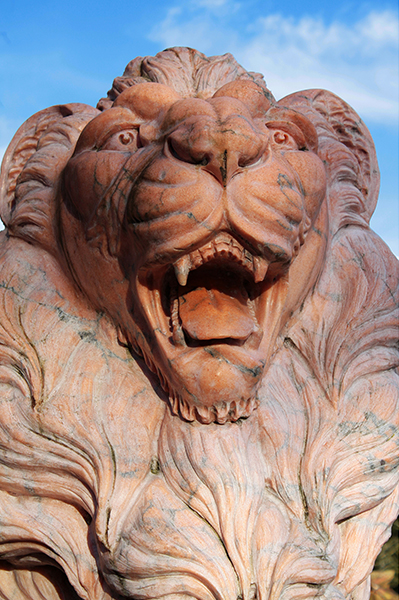
| Ruthin Castle | Close-up of lion |
Ruthin is a picturesque market town in the old county of Denbighshire, Wales, in the south of the Vale of Clwyd. The name comes from the Welsh rhudd ('red') and din ('fort'), after the colour of sandstone bedrock, from which the castle was built in 1277–1284 .The town, castle and St Peter's Square lie on a hill.
There were Celtic and later Roman settlements in the area but little is known of the history of the town before the construction of Ruthin Castle, which was started in 1277 by Dafydd, the brother of prince Llywelyn ap Gruffudd. He forfeited the castle when he rebelled against King Edward I with his brother. Edward's queen, Eleanor, was in residence in 1281. The original name was Castell Coch yng Ngwern-fôr red castle in the sea swamps. The Marcher Lord, Reginald de Grey, Justiciar of Chester, was given the an administrative district of the Vale of Clwyd, and his family ran the area for the next 226 years. The land dispute between Reginald Grey, 3rd Baron Grey de Ruthyn, and Owain Glyndŵr triggered Glyndŵr's rebellion against King Henry IV, which began on 16 September 1400, when Glyndŵr burned Ruthin to the ground, reputedly leaving only the castle and a few other buildings standing.
John Grey, 2nd Baron Grey de Wilton, established St Peter's Church in 1310 on the north side of the market place in the centre of the town, now St Peter's Square. The building dominates the Ruthin skyline. It has a double nave and boasts two medieval carved roofs. These days it is known for its musical tradition. It has a large choir of children and adults and a four-manual Wadsworth-Willis organ. Behind the church there is are the old college buildings, school and Christ's Hospital.
During the English Civil War, the castle survived an eleven-week siege, after which it was demolished by order of Parliament. It was rebuilt in the 19th century as a country house, which has now been turned into the Ruthin Castle Hotel. From 1826 until 1921 the castle was the home of the Cornwallis-West family, members of Victorian and Edwardian high society.
The supposed execution stone is where the mythical King Arthur is said to have beheaded Huail, the brother of Gildas the historian, his rival in love and war. The tale involving King Arthur is about as plausible as the history of Gildas, who wrote that after the Romans left Britain, British leaders wrote to Rome and asked them for advice about repelling the Angles and Saxon. According to Gildas, the advice as to build first a turf wall and then a stone wall across the country. Hadrian's Wall was started in AD 122 and the Antonine wall in central Scotland built mainly of turf was started from AD 142 so the chronology of Gildas was out by a few centuries!

 1.0 Strict
