 |
|
 |
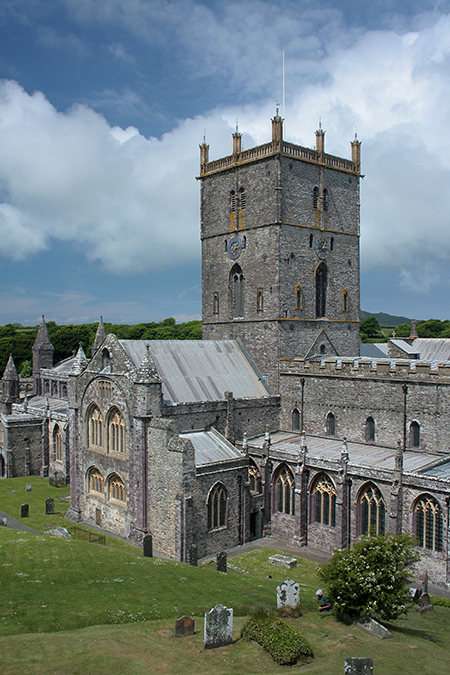
St. David's
Cathedral
|
|
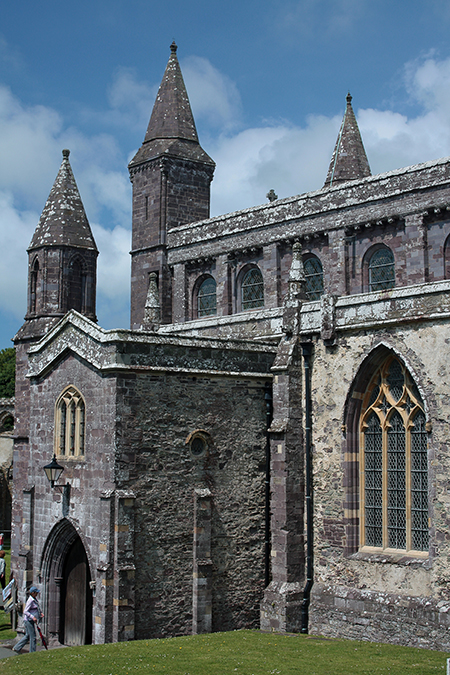
The Porch |
St Davids or St David's in Pembrokeshire, is a catheral city. It is
the resting place of Saint David, Wales's patron saint. Wikipedia tells us that David
is said to have been born to Saint Non around 500 AD, at the place
where the Chapel of St Non now stands. He was baptised by Saint Elvis
at Porthclais, and was brought up by his mother at Llanon. He may also
have been educated at the "Ty Gwyn", Whitesands by Saint Paulinus.
David is thought to have founded an earlier community somewhere to the
west of modern St Davids, before establishing a new church and
monastery at a place then known as "Glyn Rhosyn" on the banks of the
Afon Alun, where the current Cathedral now stands. Following the
Norman Conquest the city became a marcher borough, and the new hundred
(unit of local government) was named "Dewisland". The cathedral was
rebuilt during the Norman era and much of the earliest sections that
are still extant, date back to the twelfth century. However, it is
thought that this cathedral would have followed the layout of medieval
structure and it continued to host its many ancient relics, including
the remains of David. At its height, the city was visited by many
pilgrims, including noblemen and kings such as William the Conqueror in
1081, Henry II in 1171, and Edward I and Queen Eleanor in 1284.
The monastery became a Cathedral in the twelfth Century. The cathedral
raised a vast income from visiting pilgrims in the Middle Ages. The
Reformation saw both the income and importance of St Davids begin to
fade as pilgrimages fell out of favour; this was exacerbated by the
appointment of a number of English Bishops who were seemingly less
concerned with the welfare of the cathedral or the city. Perhaps most
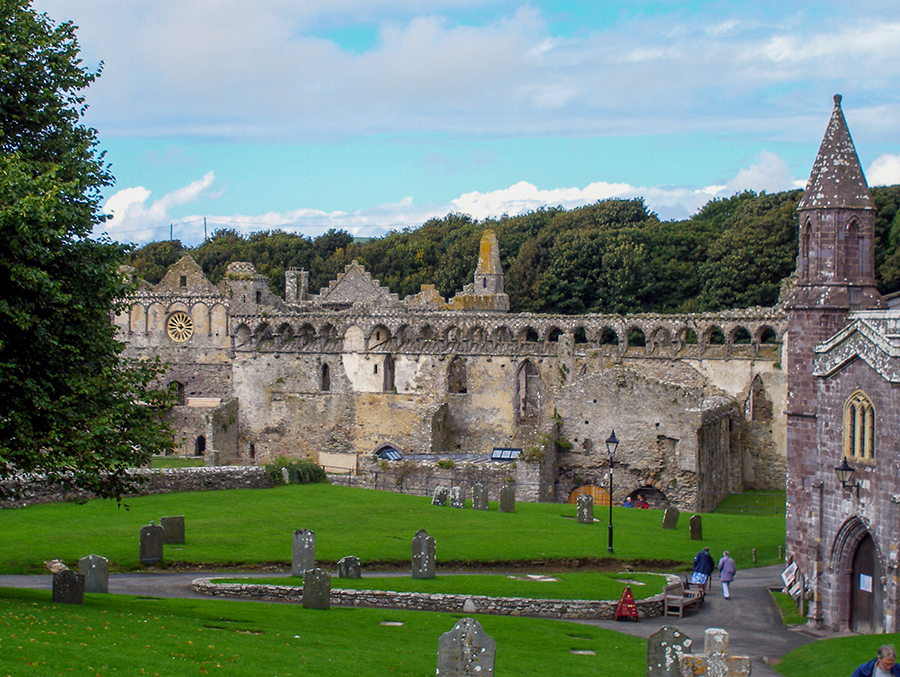
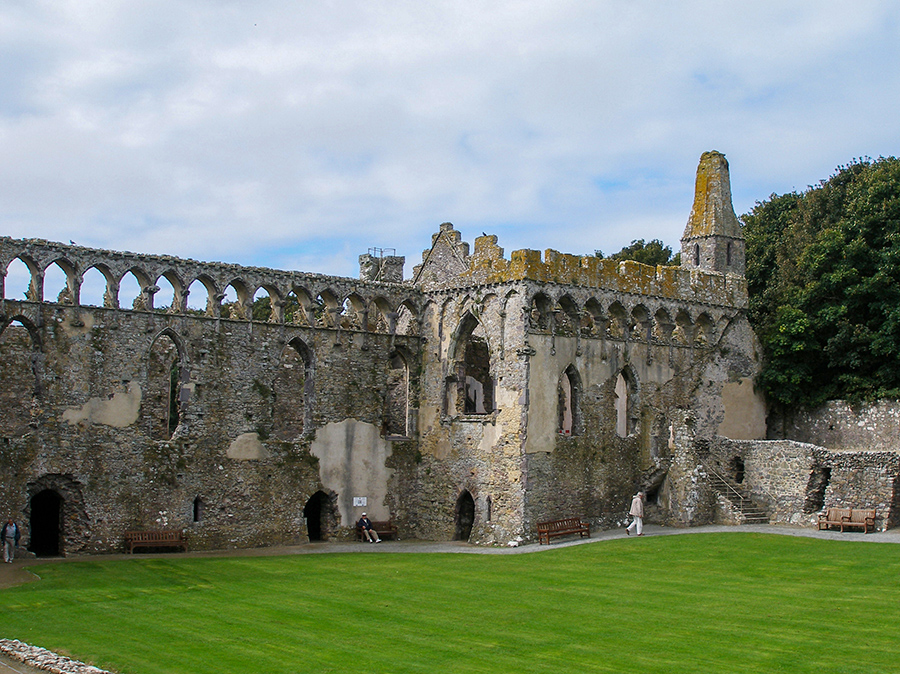
infamously, Bishop William Barlow sold the lead from the roof of the
Bishop's Palace in 1536, beginning a long period of neglect for St
Davids.

 1.0 Strict
